
QR code

Products
Nobis loquere


Fax
+86-574-87168065

Email

Oratio
Luotuo Industrial Area, Zhenhai District, Ningbo urbs, China


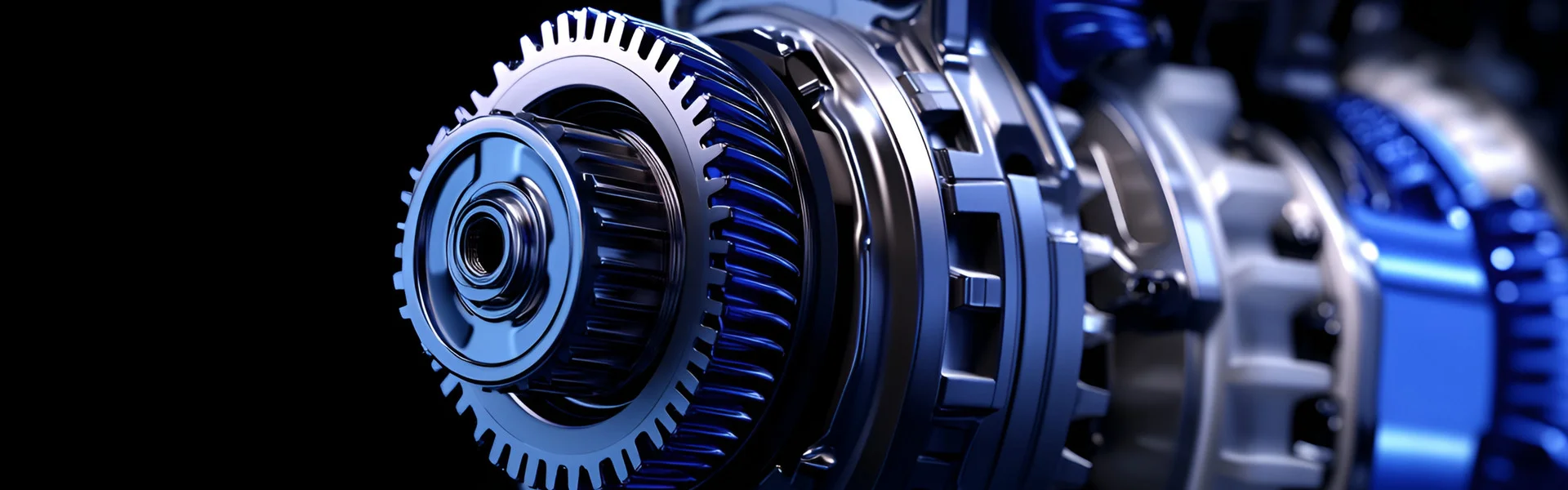
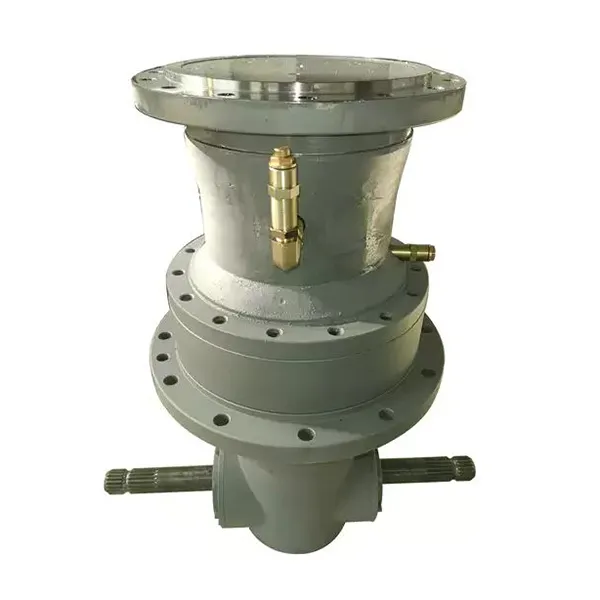
Harvesters are among the most power-intensive machines in agriculture, operating under extreme and variable loads—from dense, wet grain to tough straw and unpredictable soil conditions. To perform reliably in such demanding environments, harvesters depend on high-torque agricultural gearboxes. These gearboxes are not just simple speed reducers; they are precision-engineered power transmission systems that multiply the engine's torque, match the optimal operating speed of the harvesting mechanism, and absorb the shock loads that are inevitable in the field. Without a robust agricultural gearbox, a harvester's engine would lack the necessary torque to drive the cutting header, threshing drum, and cleaning fans simultaneously, resulting in stalls, component damage, and unacceptable downtime. At Raydafon Technology Group Co.,Limited, our factory has been designing and manufacturing high-torque agricultural gearboxes for over 20 years, and we have seen firsthand how the right gearbox transforms a harvester into a productive, reliable machine that can operate through long seasons with minimal maintenance.
The dependence on high-torque agricultural gearboxes is driven by several technical imperatives. Firstly, harvesters require significant torque multiplication: the engine typically operates at 1,800-2,200 rpm, but the threshing drum needs to rotate at 800-1,200 rpm, while the cleaning fan may need 4,000 rpm. The agricultural gearbox must accommodate these varied speed requirements through multiple gear ratios, often incorporating a hydrostatic or hydraulic drive for infinite speed control. Secondly, the gearbox must withstand extreme shock loads—for example, when a combine hits a rock or a dense patch of crop, the torque can spike to 200 percent of the normal operating torque. Our agricultural gearbox designs incorporate heavy-duty bearings, case-hardened gears, and reinforced housings to endure these demands. Thirdly, the gearbox must be reliable in harsh conditions, with effective sealing against dust and moisture, and efficient cooling to handle continuous high-power operation. In this comprehensive article, we will explore the mechanical principles, design features, and technical specifications that make high-torque agricultural gearboxes indispensable in modern harvesters, supported by real-world data and best practices from our factory's extensive field experience.
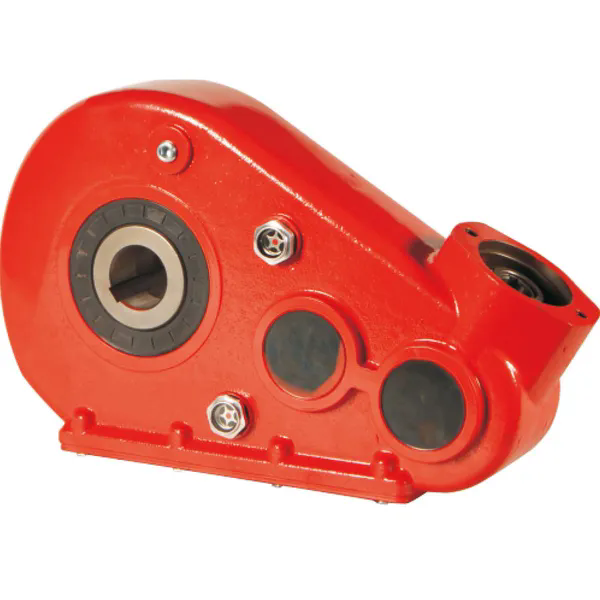
A harvester's engine produces power at a relatively high rotational speed, but the various driven components—cutting headers, threshing rotors, cleaning fans, and augers—each require a specific torque-speed combination to operate effectively. The cutting header, for example, needs high torque to drive the reciprocating knives or rotating discs through dense crop, while the threshing rotor needs a moderate speed with exceptionally high torque to separate grain from straw. Without a gearbox to multiply torque, the engine would stall under these loads, or the drive components would be severely overstressed. The agricultural gearbox performs this torque multiplication through gear reduction: by using a small input gear driving a larger output gear, the output speed is reduced, and the torque is increased proportionally. In a typical harvester, the overall reduction ratio from engine to threshing rotor can be between 3:1 and 8:1, providing the necessary torque to process even the most challenging crop conditions.
Key reasons why torque multiplication is critical in harvesters:
To quantify the effect of torque multiplication, consider a typical combine harvester with a 350 HP (260 kW) engine. At the rated speed of 2,000 rpm, the engine produces approximately 1,240 Nm of torque. Through a 4:1 reduction in the agricultural gearbox, the torque available at the threshing drum shaft increases to nearly 5,000 Nm, enabling the rotor to handle dense crop without stalling. If this torque multiplication were not provided, the engine would need to be significantly larger or the rotor would have to be redesigned to operate at much higher speeds, which is impractical for grain processing. Our factory at Raydafon Technology Group Co.,Limited has optimized the gear ratios in our agricultural gearbox series to match the most common harvester configurations, providing a drop-in solution for OEMs and aftermarket upgrades.
Moreover, the torque multiplication must be delivered with high efficiency. Our agricultural gearboxes achieve efficiency ratings of 96-98 percent, meaning that very little of the engine's power is lost to friction and heat. This efficiency translates directly into fuel savings and reduced operating costs. A harvester operating with a high-torque agricultural gearbox can complete a day's work on significantly less fuel compared to a machine with a lower-efficiency gearbox, a critical advantage in today's high-cost environment. The combination of torque multiplication, efficiency, and reliability explains why harvesters are inextricably linked to high-quality agricultural gearboxes.
Harvesting operations are characterized by unpredictable shock loads. When a combine hits a dense patch of crop, a stone, or a piece of debris, the torque transmitted through the driveline can instantaneously multiply to 2.5 times the normal operating torque. These shock loads are not only a threat to the gearbox itself but can also cause damage to the engine, the header, and the rest of the drive system. An agricultural gearbox must be designed to absorb these shocks, dissipate the energy, and protect downstream components. Our factory at Raydafon has developed a range of features in our agricultural gearboxes that provide this shock absorption, ensuring that the gearbox remains a reliable component even under the most extreme field conditions.
Key shock load resilience features of our agricultural gearbox:
Field data from a large-scale grain farm in the US Midwest illustrates the importance of shock load resilience. The farm operated two identical harvesters, one equipped with our heavy-duty agricultural gearbox and the other with a standard competitor's gearbox. During a season with unusually rocky conditions, the competitor's gearbox failed twice due to tooth breakage, costing the farm over USD 15,000 in repairs and lost time. The harvester with our agricultural gearbox completed the entire season without any gearbox issues. This real-world example underscores that shock load tolerance is not just a theoretical benefit—it is a critical factor in uptime and profitability.
In addition to physical resilience, our agricultural gearbox incorporates a lubrication system that ensures oil reaches the gears and bearings quickly during start-up, reducing the risk of wear from insufficient lubrication. The gearbox also features a breather valve that prevents pressure build-up, which can cause seal failure. These design details, combined with the robust materials, make our agricultural gearbox a dependable partner in the most demanding harvesting applications. For customers with particularly high shock-load environments, our factory offers a reinforced version with larger diameter shafts and additional bearing capacity, ensuring that the gearbox can handle whatever the field presents.
Raydafon Technology Group Co.,Limited manufactures a dedicated series of agricultural gearboxes specifically designed for combine harvesters and forage harvesters. These gearboxes are available in a range of sizes and ratios to match different engine powers and header configurations. The table below summarizes the key technical specifications for our most popular agricultural gearbox models used in harvesters. All data are based on testing under ISO and DIN standards, and our factory provides a detailed test report with each gearbox. We also offer custom designs for specific OEM requirements, including special flange patterns, input shaft configurations, and integrated speed sensors.
| Model | Ratio | Input Power (kW) | Output Torque (Nm) | Input Speed (rpm) | Weight (kg) | Lubrication | Application |
| RHT-300 | 3.6:1 | 250 kW | 4800 Nm | 540/1000 | 95 kg | Pressure/splash | Threshing drum drive (up to 300 HP) |
| RHT-450 | 4.2:1 | 380 kW | 7200 Nm | 540/1000 | 135 kg | Forced lubrication | Heavy-duty combine (350-450 HP) |
| RHT-600 | 5.0:1 | 500 kW | 10500 Nm | 540/1000 | 185 kg | Forced lubrication | Large harvesters (500 HP+) |
| RHT-FH | 2.5:1 | 200 kW | 2800 Nm | 1000 | 78 kg | Splash | Forage harvester cutter head |
| RHT-VAR | Variable (hydrostatic) | 300 kW | 5500 Nm max | Variable | 150 kg | Pressure | Hydrostatic-driven harvesters |
In addition to these standard models, our factory offers a range of optional features for the agricultural gearbox, including an integrated parking brake, a speed sensor output for ground speed measurement, and a remote lubrication system for high-mounted gearboxes. We also provide a wide range of mounting configurations, including foot-mount, flange-mount, and torque-arm mount, to simplify integration with different harvester layouts. For applications with extreme dust and moisture, we offer a sealed version with double-lip shaft seals and a pressure compensation system that prevents contamination ingress.
All our agricultural gearboxes undergo a rigorous quality control process, including 100 percent gear tooth profile measurement, a 4-hour test run under full load, and an oil leakage test. Each gearbox is accompanied by a certification package that includes a test report, a parts manual, and a maintenance schedule. Our factory at Raydafon Technology Group Co.,Limited maintains a stock of standard agricultural gearbox models for fast delivery, and we can produce custom ratios within 6-8 weeks for large volume orders. With our extensive design and manufacturing capabilities, we are a trusted partner for harvester OEMs and aftermarket distributors worldwide.
A high-torque agricultural gearbox is a significant investment, and like any precision mechanical component, it requires regular maintenance to achieve its full service life. Harvesters operate in some of the harshest conditions: dust, crop residue, and variable temperatures place a continuous strain on the gearbox. However, with a systematic maintenance program, the agricultural gearbox can operate reliably for 5,000 to 8,000 hours or more, which often translates to 10-15 years of seasonal use. Our factory at Raydafon has developed a comprehensive maintenance guide based on our experience with thousands of gearboxes in the field. By following these guidelines, harvester operators can avoid costly breakdowns, reduce downtime, and ensure that their agricultural gearbox remains a dependable component of the machine.
Essential maintenance practices for a harvester agricultural gearbox:
A practical example from a large wheat farm in Australia illustrates the value of maintenance. The farm used our agricultural gearboxes on six self-propelled harvesters. After the first two seasons, they noticed one gearbox running hotter than the others. Upon inspection, they found that the oil had been contaminated with dust due to a faulty breather cap. They changed the oil and replaced the breather, and the gearbox returned to normal operating temperature. If they had ignored the temperature warning, the gearbox could have failed within 100 hours, costing over USD 20,000 in repairs and lost harvest time. This experience prompted the farm to implement a strict weekly oil check and temperature monitoring protocol, resulting in zero gearbox failures over the next five harvests.
Our factory provides a maintenance logbook with every agricultural gearbox, along with a pre-formatted maintenance schedule. We also offer a remote monitoring solution (optional) that tracks gearbox oil temperature, vibration, and hours of operation, sending alerts to the operator's smartphone when maintenance is due. For operators who prefer a simpler approach, we recommend marking the oil change date directly on the gearbox housing with a paint marker. By investing a small amount of time in maintenance, the life of the agricultural gearbox can be maximized, resulting in lower total cost of ownership and higher overall productivity for the harvester fleet.
Question 1: Can a harvester operate effectively with a lower-torque agricultural gearbox?
Answer: No, a harvester requires a high-torque agricultural gearbox to handle the demanding loads of threshing, separation, and ground drive. Using a gearbox with insufficient torque capacity will lead to frequent stalls, reduced throughput, and potential damage to the gearbox and drive components. The gearbox must be matched to the engine's power and the specific harvesting conditions. Our factory at Raydafon Technology Group Co.,Limited provides a power matching service to ensure that the agricultural gearbox is correctly sized for your harvester model and operating environment.
Question 2: How do I select the correct reduction ratio for my harvester agricultural gearbox?
Answer: The reduction ratio depends on the required output speed of the driven component (threshing drum, fan, or auger) and the engine's rated speed. For example, if the engine operates at 2,000 rpm and the threshing drum needs 500 rpm, a 4:1 reduction is required. Additionally, the gearbox must be able to handle the maximum torque at the output. Our factory provides a ratio selection sheet and can perform a detailed power and torque calculation for your specific configuration, ensuring optimal performance and longevity of the agricultural gearbox.
Question 3: What lubricant should I use in my harvester agricultural gearbox, and how often should I change it?
Answer: We recommend using a high-quality gear oil meeting API GL-5 specifications with a viscosity of SAE 85W-140 for most climates, and SAE 80W-90 for cooler regions. The oil should have EP (extreme pressure) additives to protect gears under high loads. The recommended oil change interval is every 500 operating hours or annually, whichever comes first. However, if the harvester operates in extremely dusty or wet conditions, we recommend changing the oil every 300 hours. Always use a clean funnel and avoid overfilling, as this can cause the oil to foam and reduce its lubricating properties.
Question 4: How can I prevent my agricultural gearbox from overheating during long harvest days?
Answer: Overheating can occur if the gearbox is overloaded, inadequately lubricated, or if the oil level is too low. To prevent overheating, ensure that the oil level is correct and that the breather valve is clear to allow pressure release. For heavy-duty applications, we recommend selecting a gearbox with a larger oil capacity or an external oil cooler. Also, avoid operating the harvester at full capacity continuously; allow the machine to idle for a few minutes periodically to circulate oil and dissipate heat. Our agricultural gearboxes are designed with thermal sensors that alert the operator if the oil temperature exceeds 95°C.
Question 5: What is the typical warranty period for an agricultural gearbox from Raydafon Technology Group Co.,Limited?
Answer: Our agricultural gearboxes come with a standard 2-year warranty against manufacturing defects in materials and workmanship. This warranty covers the housing, gears, shafts, and bearings, provided that the gearbox has been used within its specified power rating and has received regular maintenance as outlined in our user manual. For harvester gearboxes used in heavy-duty or continuous 24/7 applications, we offer an extended 3-year warranty as an option. Our factory also provides a repair and exchange service for gearboxes that are out of warranty, ensuring minimal downtime for your harvester operations.
Harvesters are the most productive machines in agriculture, and their performance is directly linked to the quality and capability of their agricultural gearboxes. The high-torque requirements, shock load resilience, and reliability demanded by modern harvesting would be impossible without the precision engineering and robust construction of a properly designed agricultural gearbox. At Raydafon Technology Group Co.,Limited, our factory has dedicated itself to producing agricultural gearboxes that meet these exacting standards, providing farmers and OEMs with the power transmission solutions they need to maximize harvest efficiency and minimize downtime. Our extensive range of gearboxes, combined with our technical support and maintenance guidance, ensures that your harvester can perform at its best through every season.
Are you looking to upgrade or replace the agricultural gearbox on your harvester? Contact Raydafon Technology Group Co.,Limited today for a comprehensive gearbox selection consultation. Provide your harvester model, engine power, and typical operating conditions, and our engineering team will recommend the optimal gearbox with the correct ratio, torque rating, and features for your specific needs. We offer sample gearboxes for testing, OEM customization, and a fast delivery service to any location worldwide. Request your free gearbox specification sheet now from Raydafon Technology Group Co.,Limited and ensure that your harvester operates at its full potential.
+86-574-87168065
Luotuo Industrial Area, Zhenhai District, Ningbo urbs, China